
Harbin sausages 哈尔滨香肠
These Lithuanian-style sausages are famous throughout China. 这些立陶宛风味的香肠闻名于中国。
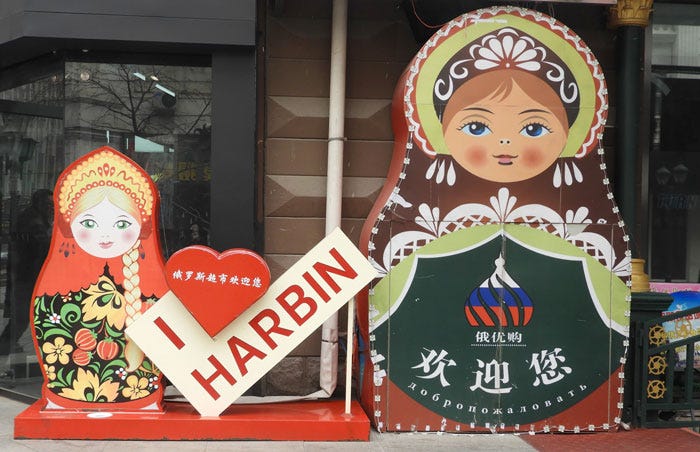
Harbin was a small village in 1898 when the Russians selected Harbin as the base of their administration over the Chinese Eastern Railway. The village rapidly grew into a modern city. The majority of settlers were Ukrainians, Russians, Jews, Poles, Georgians, and Tatars.
1898年当俄国人越过中国东部铁路选择哈尔滨作为他们的管理基地时,哈尔滨还是一个小村庄。 村庄迅速地扩大为一座现代化城市。 移居者多为乌克兰人、俄国人、犹太人、波兰人、格鲁吉亚人和鞑靼人。
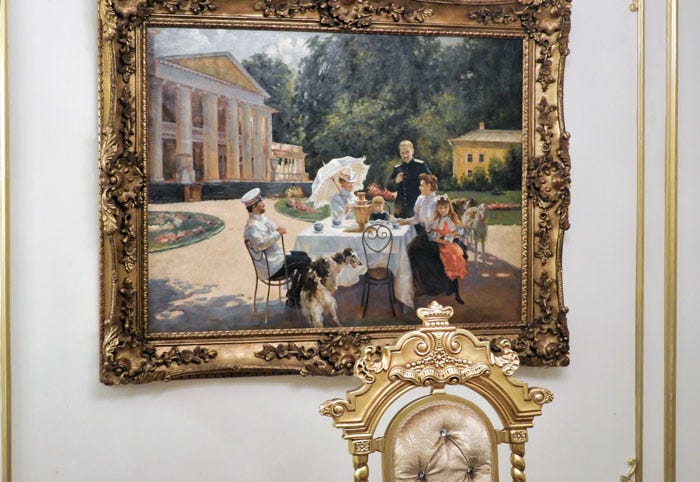
A painting in Tatco, a Russian restaurant in Harbin that was established in 1901.
在Tatco绘画作品中的这家俄国餐馆,于1901年在哈尔滨成立。
The city was intended as a showcase for Russian power in Asia and the the buildings, boulevards, and parks were planned by distinguished European architects and city planners.
本城市意欲作为一座亚洲俄国力量的陈列馆以及大厦、大道和公园,均由卓越的欧洲建筑师和城市规划者策划。
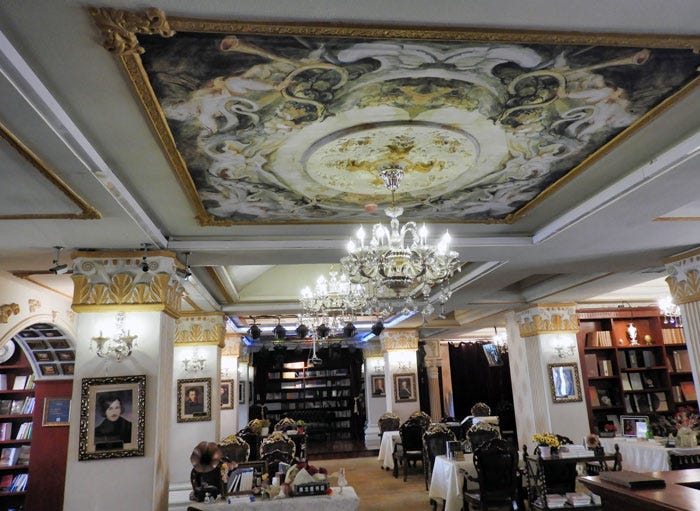
The Gogol Bookstore in Harbin
哈尔滨果戈里书店
After Russia's Revolution in November 1917, more than 100,000 defeated White Russians fled to Harbin. Harbin was almost a totally Russian city with a Russian school system, as well as publishers of Russian-language newspapers and journals.
1917年11月俄国革命之后,数以100,000计被击败的白俄人出逃到哈尔滨。 哈尔滨几乎是一个完整的俄罗斯,她拥有俄国教育体系以及俄文报纸和期刊的出版商。
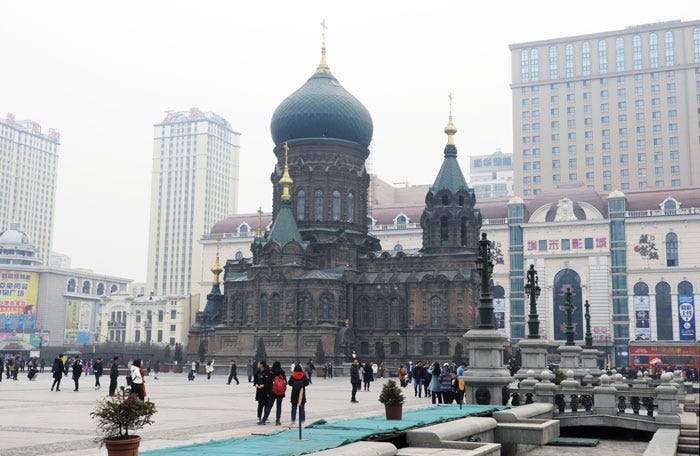
St. Sophia Cathedral, Harbin
哈尔滨索菲亚大教堂
In the early 1920s, at its peak, the Russian community numbered around 120,000, the largest enclave outside the Soviet Union.
19世纪20年代初,俄罗斯人口达到顶峰,约12万人,哈尔滨是苏联境外的最大飞地。
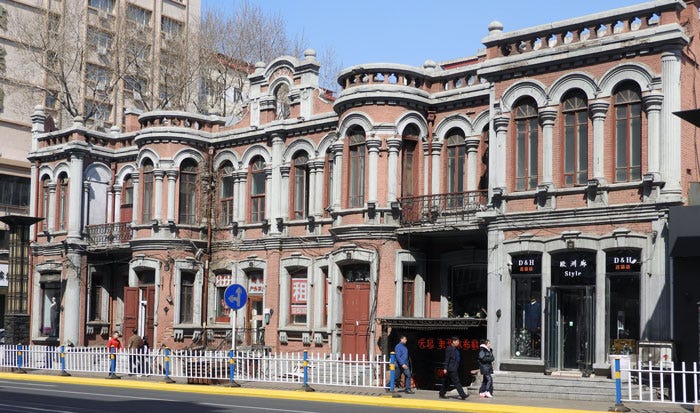
This building was built in 1921.
该座大厦建于1921年。
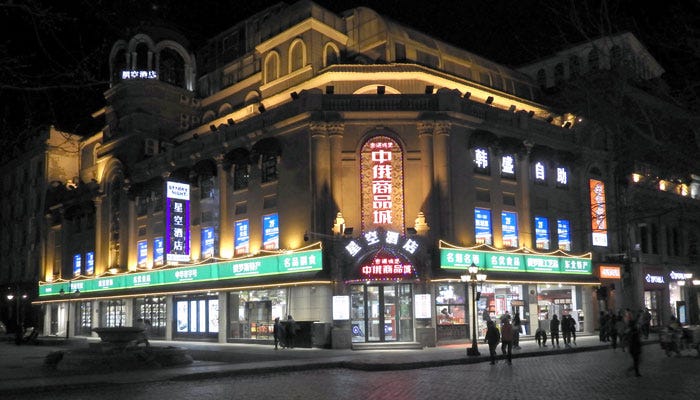
Retail shops on Harbin’s Central Street
哈尔滨中央大街上的零售商店
The Eastern Europeans not only built European buildings, they brought their culture and foods to Harbin.
东欧不仅修建了欧式建筑,他们还将其文化和食品带到了哈尔滨。
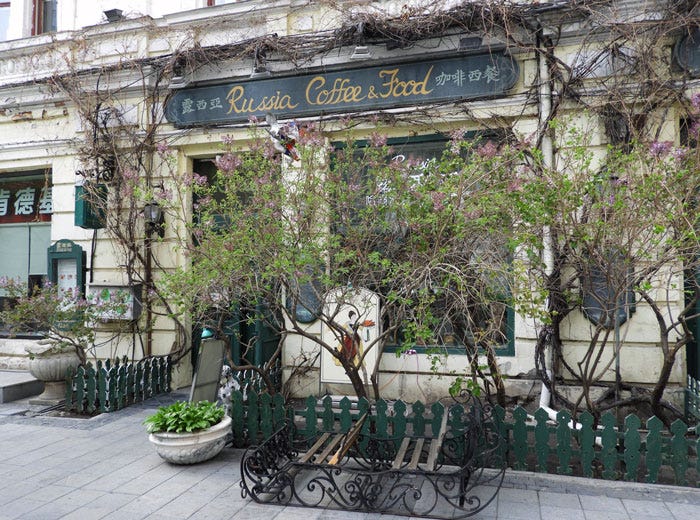
This Russian restaurant was established in 1914.
这家欧洲餐馆于1914年成立。
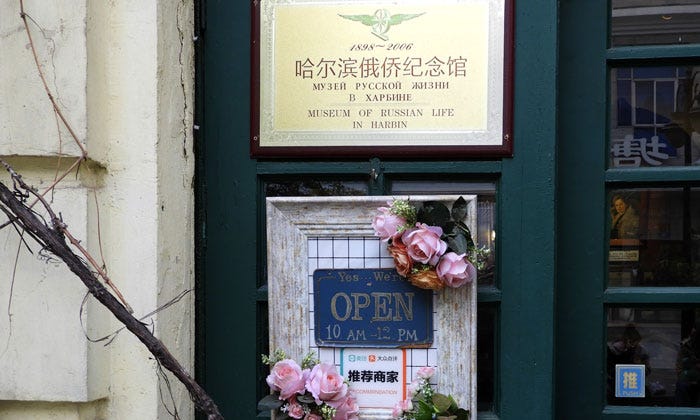
This sign says that this restaurant is a “Museum of Russian Life in Harbin”.
这个牌子上写的是这家餐馆是一座“哈尔滨俄国生活博物馆”。
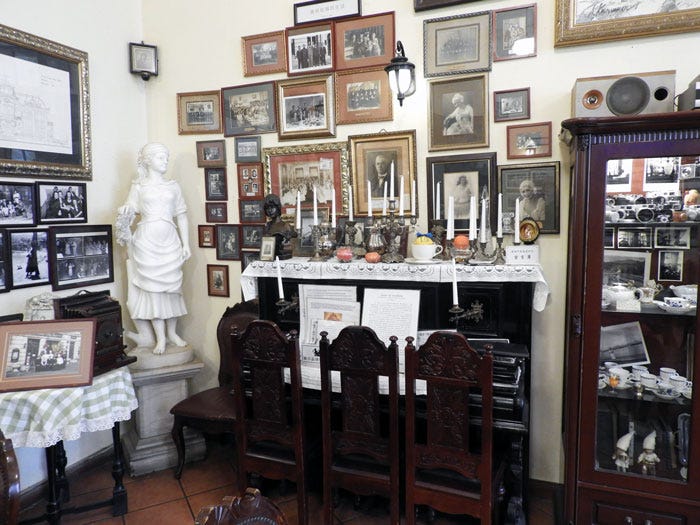
They are not kidding. The interior brings you back one hundred years. The restaurant serves authentic Russian food including the best cabbage rolls I ever had.
他们不是在开玩笑。餐馆的内部设施会带你回到一百年前。餐厅供应正宗的俄罗斯美食,包括我吃过的最好的卷心菜卷。
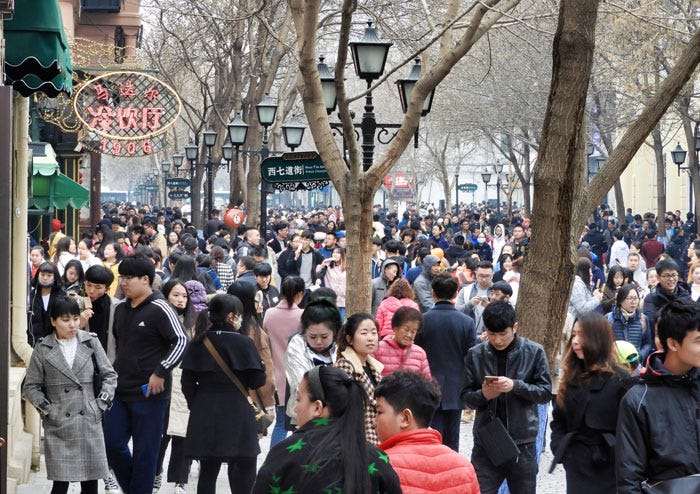
This is Central Street during the 2018 Tomb Sweeping holiday showing that Harbin’s old Russian streets are still very alive.
这是在2018年清明节假日期间,展现出哈尔滨中央大街这一老式俄国街道仍然非常活跃。
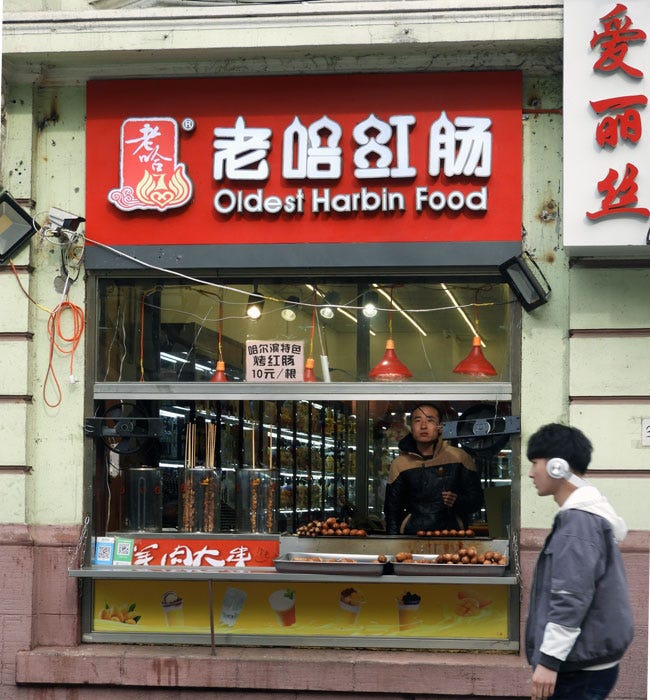
The most popular of all the European foods is the Harbin sausage. This vendor is selling them on a wooden skewer for 10¥ ($2.00 Canadian).
所有欧洲食物最普遍的是哈尔滨香肠。 这位摊主在售卖10元人民币( $2.0加元)一串儿的香肠(香肠插在木杆上)。
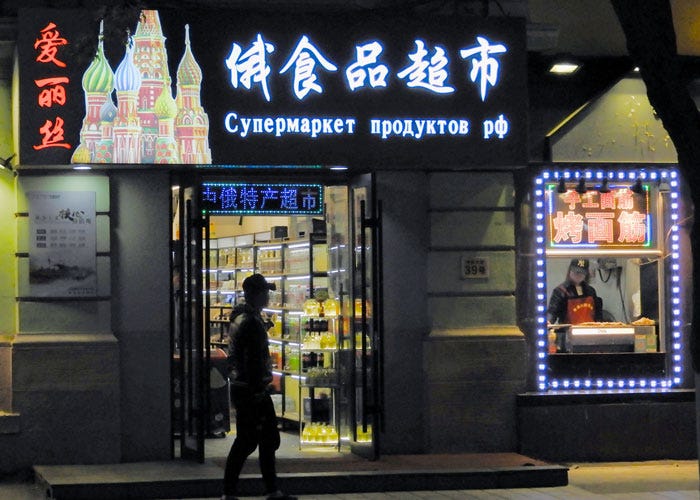
The Harbin-style smoked savory red sausage is similar to Lithuanian and German sausages.
哈尔滨风格的烟熏美味红肠与立陶宛香肠和德国香肠相似。
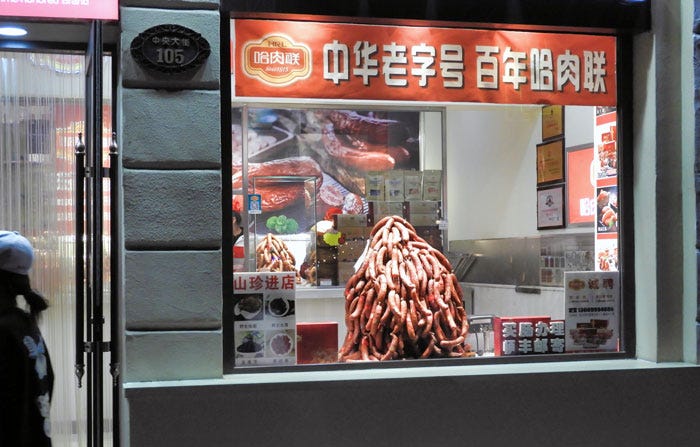
In 1909, Churin's Sausage Factory, with Lithuanian employees, first produced European flavor sausage. Since then European style sausage become a Harbin specialty.
1909年,Churin的香肠工厂与立陶宛员工合作,首次生产出欧洲风味香肠。从此,欧式香肠成为哈尔滨的特色菜。
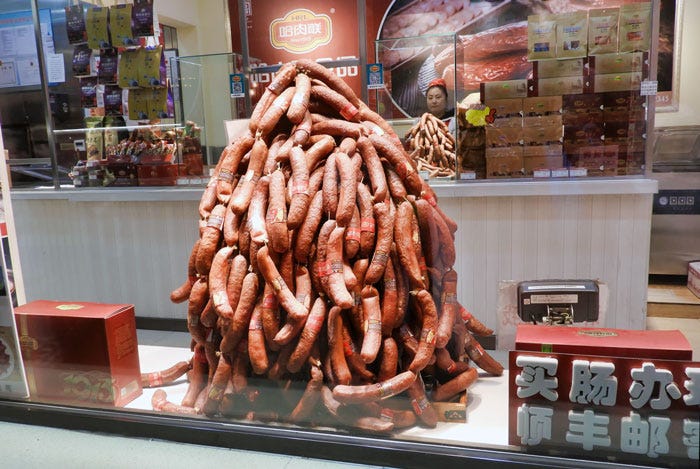
Harbin sausages are famous throughout China. You buy them by the kilogram and the store vacuum-packs them for you.
哈尔滨香肠闻名于全中国。商店按公斤零售,采用真空包装。
Chinese translation by: Wang Xiaohong, Changchun, Jilin province.
中文翻译:王小红,吉林长春