
Chinese condos
They are not the same as what we have in North America.
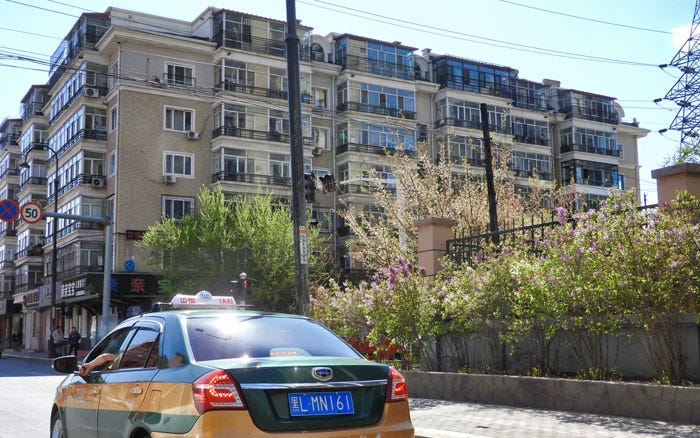
A modern seven-storey mixed-use condo in Harbin
In North America, hotels and residential buildings share similar design features. What’s more, many condo developers try to give their developments the look and feel of a grand hotel resort.
There is an oversized ground-floor lobby in the centre of the building. The concierge desk mimics a hotel front desk. There may be amenities such as fitness centres, indoor swimming pools, hot tubs, saunas, theatre rooms, guest suites and a billiard room.
Each residental floor has a long common hallway with elevators in the middle and two emergency staircases; one at each end. The unit doors open inward into the unit so doors don't swing out into the common hallways.
The basic Chinese condo
Most Chinese condominium residental towers are based on an early Soviet design known as Khrushchyovka.
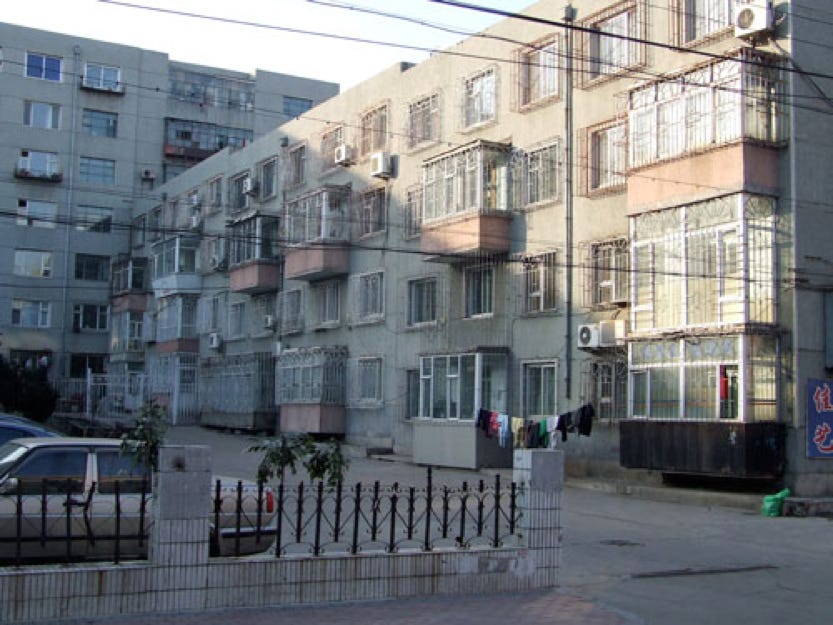
An older four-storey Khrushchyovka styled residental condo in Changchun.
A basic Khrushchyovka was a residential building designed to be constructed en masse, in record time, and at minimal cost.
The design was developed in the USSR during the early 1950s, during the time its namesake, Nikita Khrushchev, directed the Soviet government.
Most of the buildings have five-stories, the maximum number of floors Soviet building regulations allowed without an elevator. (There are some Chinese residential buildings are seven-floors high that don’t have elevators.)
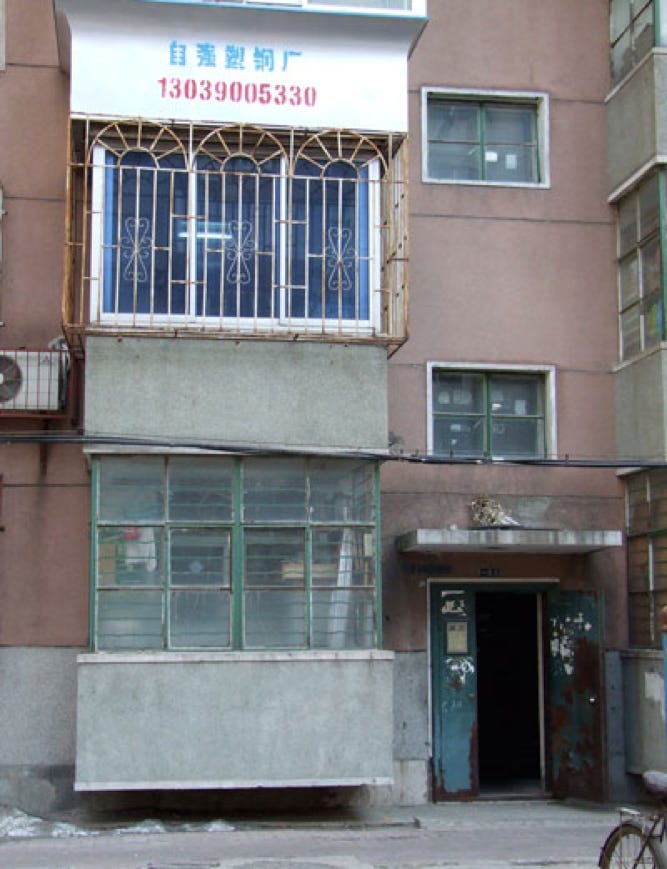
My first condo rental when I lived in Changchun.
In this older building, the open lobby door leads to a staircase that goes up to the residental floors. The small windows above the doors allows light into the staircases.
These condo towers have no elevators. Instead of having long hallways running the length of the building like we have in North America, a Chinese condo has a series of concrete staircases (with a single elevator) with landings that service two to five units per floor. The individual staircase/lobbies are separated from all the others.
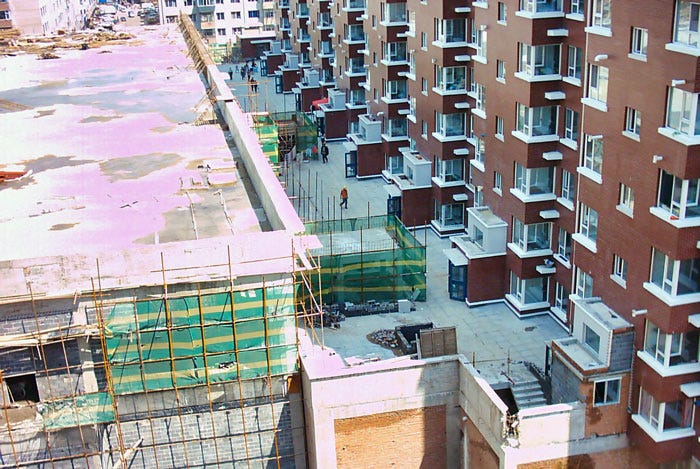
On the right, in a newly constructed condo, you can see nine lobbies. (See the open doors.) Each lobby will have one elevator and one staircase.
There is no alternate exit in cases of a fire or other disaster. A condo tower may have ten or more narrow and independent staircases, depending on how long it is.
Safety is an issue, However the units are more secure as access to the whole building by thieves is far less likely.
Demolishing older condos
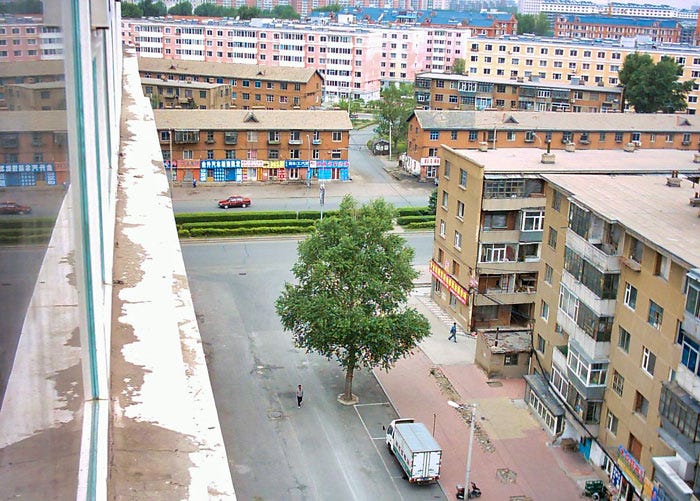
In early 2009, the old five-storey mixed-use condo buildings on the right, were demolished.
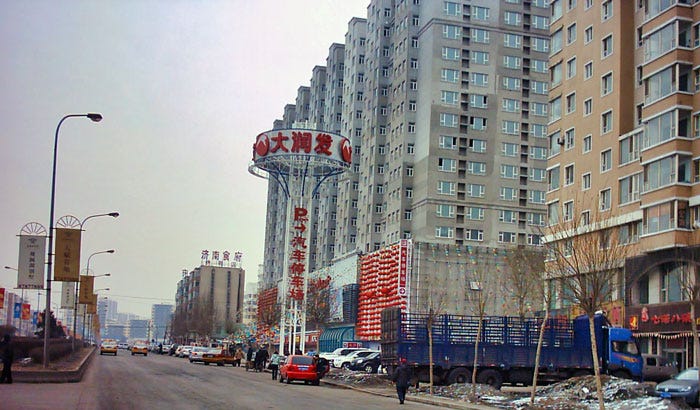
Within two years, this huge mixed-use condo was in their place. When this photo was taken, construction was almost completed. A three-storey RT Mart—a large Wal-Mart style supermarket—is the anchor tenant.
Security
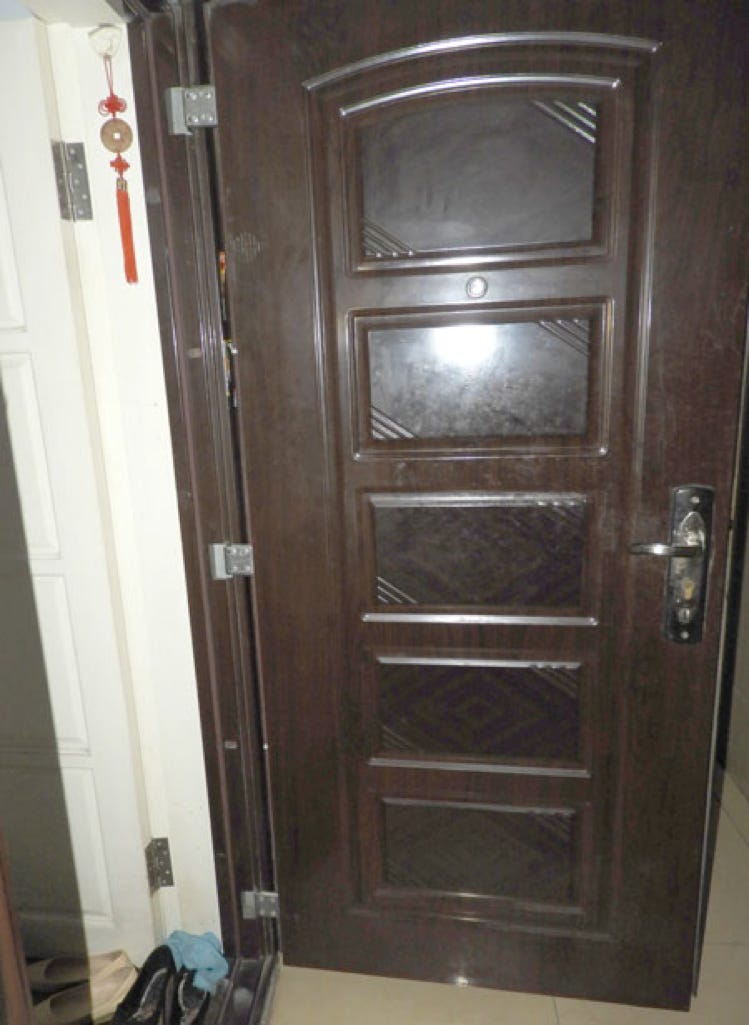
In China, the unit doors are made of steel and they swing out into the common hallway. Having a large steel lip all around the door on the top and both sides makes it very difficult for someone to break into the unit.
Barred windows
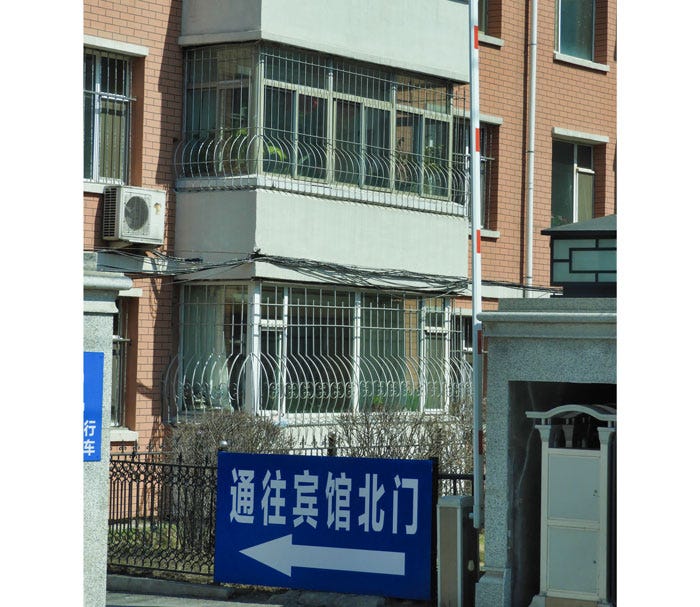
Home break-ins are common in China. In the top photo of a residential condo, you can see that many owners have installed bars on their windows to deter thieves.
However, in case of a fire, the residents can be trapped in their homes. The fire departments are skilled in quickly pulling the bars off the windows and gaining entry into the units.
Door locks
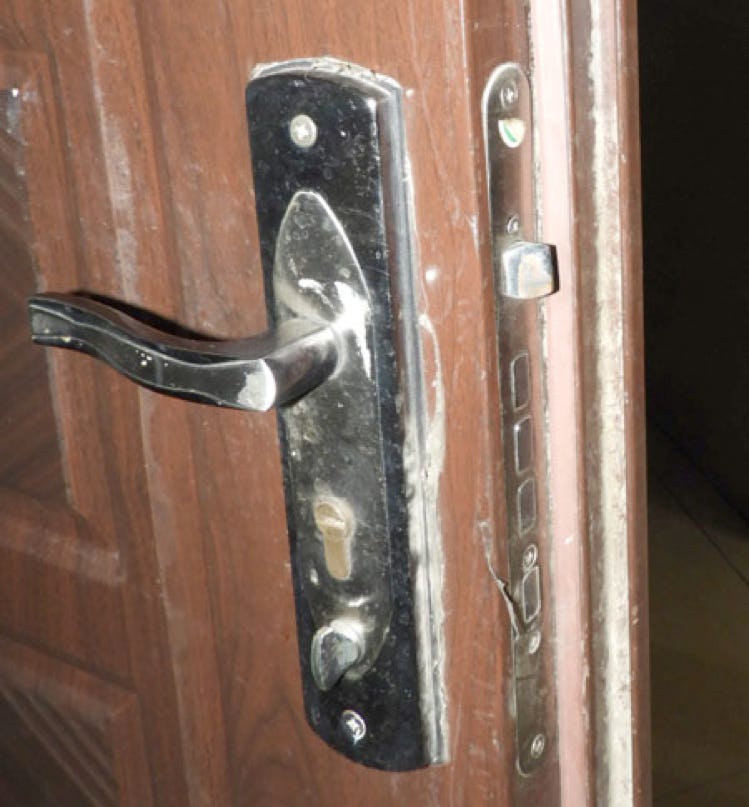
The main defense against thieves is the locks on the unit's steel door. The lock has two stages. When the owner is home, they engage the lock's first stage.
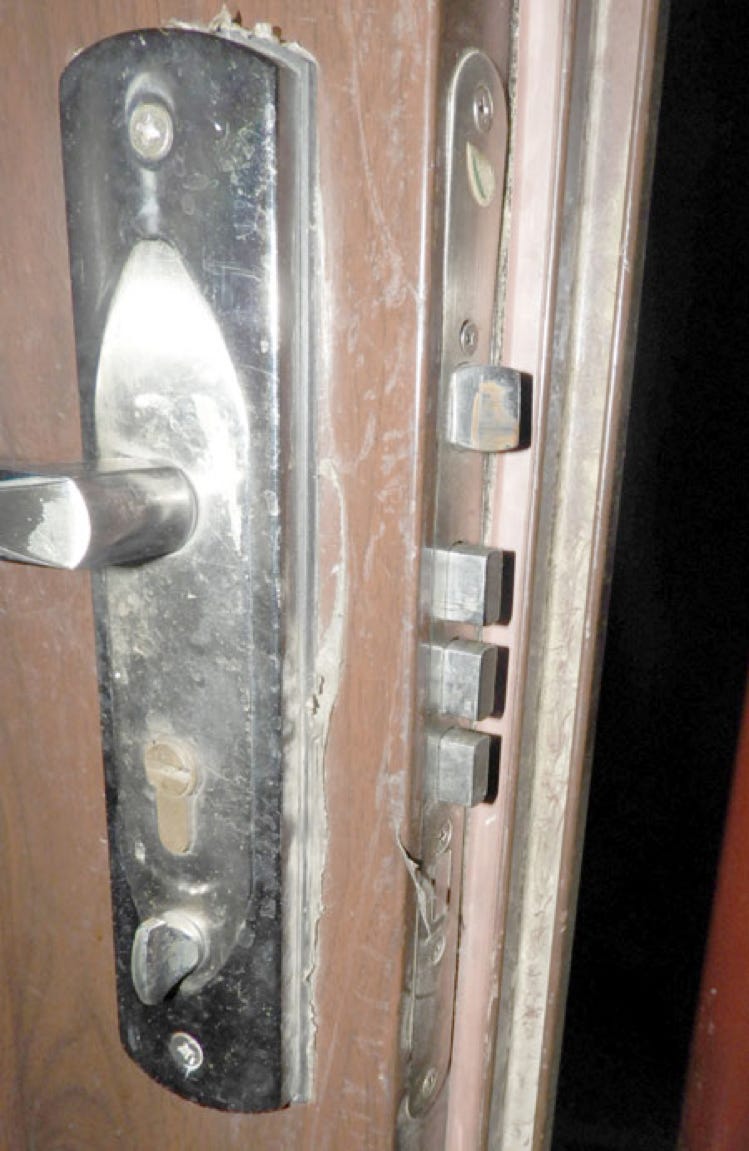
When the residents are leaving the unit empty, they engage the lock's second stage. The three dead bolts can only be released by the use of a key. Anyone inside the unit cannot open the door.
Buying a bare bones unit
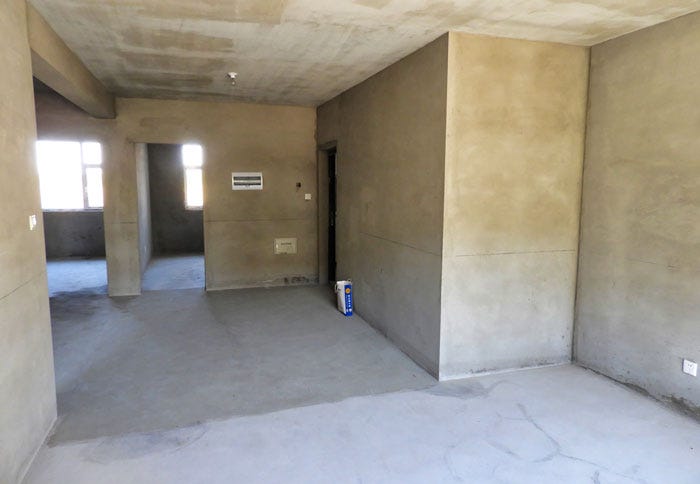
Until recently, most purchasers of new condos would take possession of an empty shell. The front door would be in place, along with the bare concrete walls, ceiling and floors. The electrics and plumbing are just roughed in.
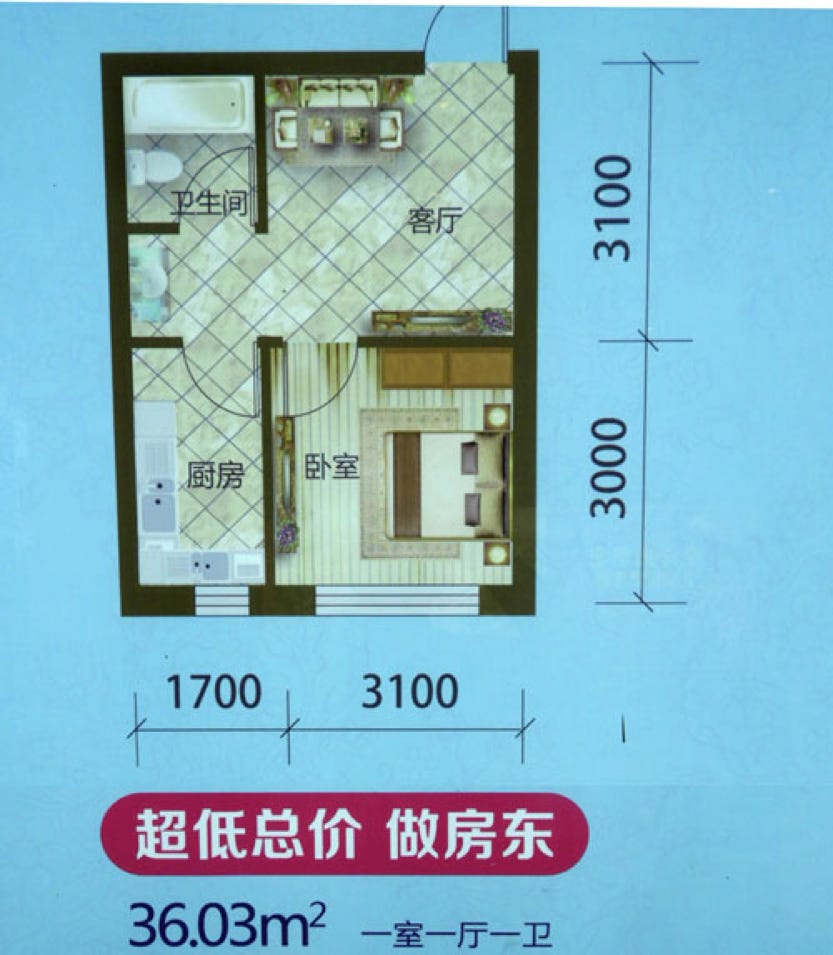
A buyer can pay extra and have the builder finish the apartment. The model suites and sales literature gives ideas on how the units will look.
The owners can hire their own designer and contractors to complete the unit or they can act as their own general contractor.
The finished units can match the best we have in North America. I have no doubt about that.
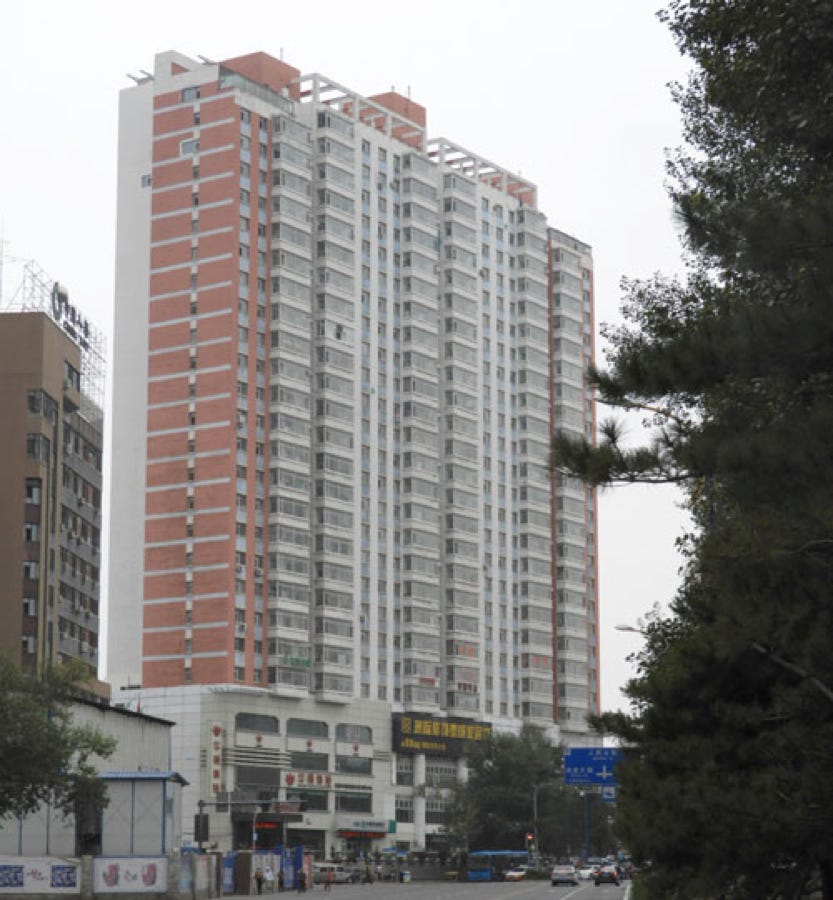
The new condo towers usually are designed to have one or more levels of retail/commercial space at the base of the tower with residential units sitting on top.
These towers have a single elevator and a staircase in each lobby. (It is annoying when the elevator is out of service.)
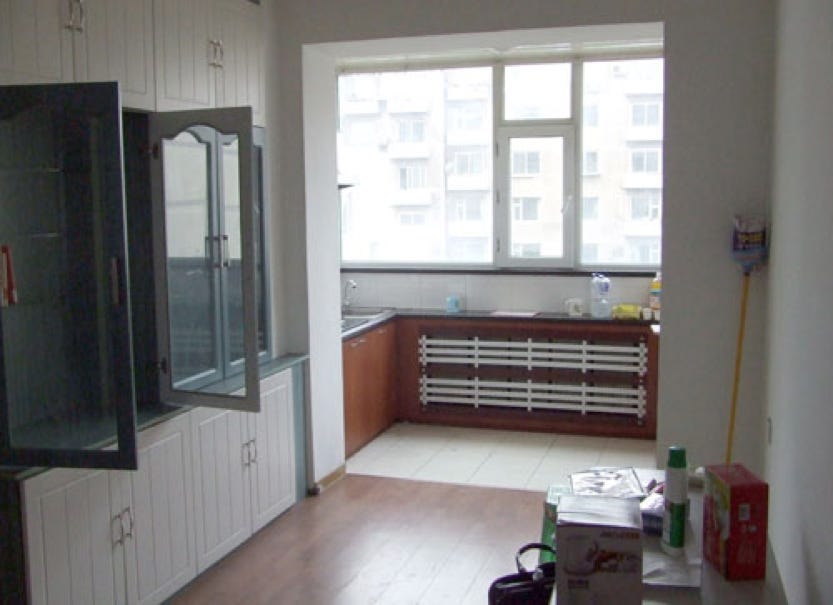
This is the dining/living room and kitchen in a modern one-bedroom unit. The owner installed a built-in cabinet. The kitchen has a two-burner gas stove and a single stainless-steel sink. The large windows allow for a lot of natural light.
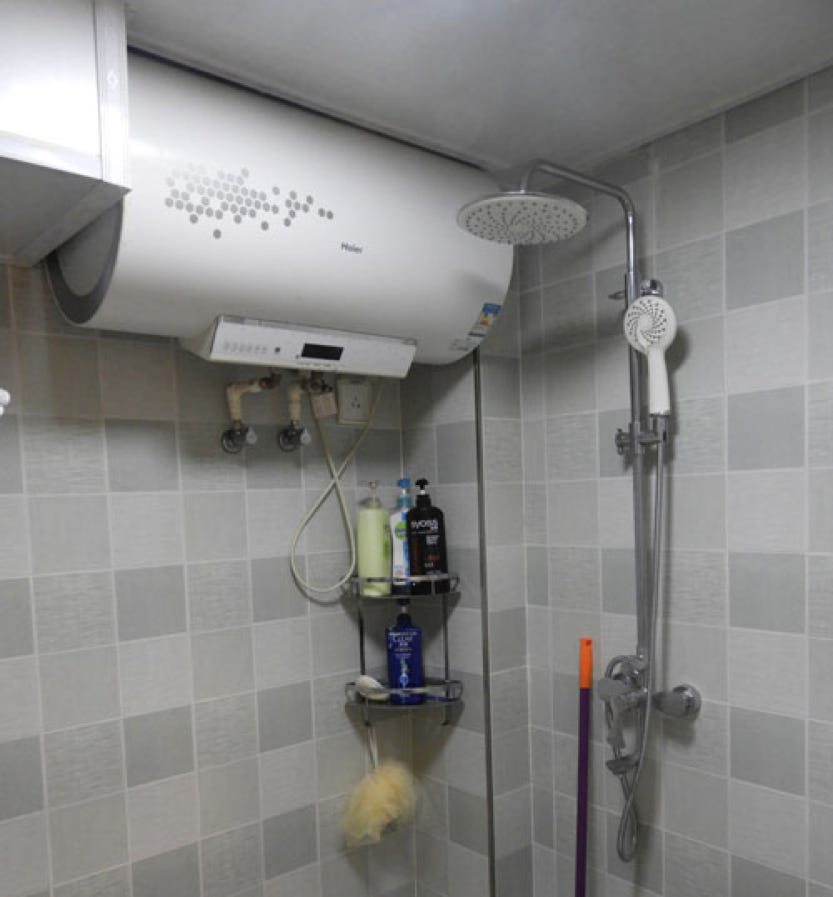
To reduce building costs and to greatly lower ongoing common element maintenance costs, there are no western-style constant circulating hot water systems in the condo towers. Only cold water is supplied to the residential units.
A electrical hot water tank is installed in the bathroom ceiling. The tanks have an on/off switch so the residents only pay to heat hot water when they need it.
This tank supplies hot water for showers, the bathroom sink, a washing machine and the kitchen sink.
You turn it on 20 minutes before you want to take a shower and when you have finished your shower, you turn the heater off and the insulated tank will retain enough hot water for shaving and washing the dishes.